
Showing posts with label Phil Liebman. Show all posts

Monday, October 12, 2015

MikkiLeaks: I Did This On Purpose by Phil Liebman


In accepting the noble and dangerous assignment of investigating and exposing truths for Mikki-Leaks, my promise to you, my readers, has been to provide the information you need to know on a need to know basis, with hopes that I may help you become heroic business leaders. So what do you need to know about having a purpose or knowing as much about “why” you lead as “how” you lead others? 

It’s easy to dismiss the “need” for a clear sense of purpose driving our businesses as the fodder of self-help books and the mumbo-jumbo of self-proclaimed business gurus. No person or business ever became successful by simply writing a vision or mission statement. How we think may be critical to how we perform, but the idea that we “Think and Grow Rich” is no more plausible than believing that hope is a viable strategy.   

I believe it is clear that nothing worth accomplishing has ever been achieved without the dedication of hard work, commitment and, like it or not,  some luck. So why, then, does having a deep sense of purpose make a difference in achieving your best or realizing your potential? How is having a purpose all that different from hoping for the best? 

I would address the question by suggesting that purpose is what aligns our thinking with the necessary action to be taken. Purpose links directly to planning. In fact, it is what guides our plans. Without purpose the actions we take tend to be random or misguided. Luck becomes a more needed ingredient in accomplishing what we set out to do. But leading with purpose we can understand what we need to “be” in order to do what needs to be done. In other words the characteristics that enable us to plan for what we want to happen, plan around what we do not want to  happen and even plan for the unexpected, all come from understanding the purpose behind our actions.  

On a day-to-day basis, what we plan are simple decisions we make by habit. A good example could be when to have lunch and what to eat. The simple purpose is to make sure there is time to grab a bite and then decide based on what you feel like or would prefer to eat, or sometimes just what is simply convenient to our circumstances. I don’t really feel like eating my yogurt but don’t have time to go out and get a sandwich. Or I don’t have time to sit down and have a sensible, healthy lunch so I’ll whip through the McDonalds drive-through and eat while driving to my appointment. 

Having a greater purpose provides further guidance. Rather than a Pavlovian reaction to it, either by the fact that it's noon or simply that we feel hunger (followed by stuffing our face with either whatever is convenient or tempting), we might instead determine that eating is really about health and nutrition. A Big Mac, fries and a Coke would solve the hunger, and perhaps be an efficient use of time but not be at all efficacious if the purpose driving my thinking about lunch suggests that I need more than fat and empty calories. In fact, I might prefer to stay hungry than make a poor choice based on how I see the need for a mid-day meal to “perform.”  Or, I might even be prepared with some healthy choices packed with me in my car for just such circumstances. 

The same is true with every set of choices and decisions we face. We can up the level of performance only when we have a clear idea of what is truly important. That translates into understanding not only the purpose of our actions but what it is we ultimately intent to achieve or accomplish. This is efficacy. 

There really can be little doubt that for your company, or any company, to sustain a high level of performance there must be a driving force. That driving force is a matter of leadership. For leaders to perform in a highly effective manner, you must connect to some sense of purpose and then be able to instill that purpose into the DNA or the habits of the organization. The greater the purpose is, the stronger the driving force will be. 

It is imperative to separate cause and effect when thinking about purpose. Making money or profits is not the purpose-driven cause - it is the consequence of having accomplished something that is ideally valuable and hopefully worthwhile.Knowing why your company is designed to do whatever you do is the foundation of purpose. The more noble the purpose, the less the possibility that the cause is contrived. In fact, the greatest causes tend not to be had by people - people tend to be had by them. The cause has its teeth in the leader of the organization and she cannot shake its grasp. That might be a lofty notion and I am not suggesting that success in what we do requires that kind of passionate engagement with a cause but I am quite certain that to improve your company’s performance, and yield greater profits as a result, you must have a sense of purpose beneath your feet and in front of the people you lead. Once you have defined your purpose and the purpose for your organization - you can then fully define your role and the role of your employees in accomplishing whatever it is you do. This is the key to driving the highest level of real performance possible. It may be the single key to unlock the greatest potential of yourself, your people and your organizations. 

My purpose now is to adjust my disguise and slip effortlessly out of sight in search of the next thing you need to know.

Recommended Additional Reading: Harvard Business Review published a piece by Nick Craig and Scott Snook titled “From Purpose to Impact.” It is available at www.HBR.org. It furthers the thinking as to why “purpose” is vital to any organization’s success in wonderful and explicit detail.
 
Phil Liebman is a Vistage Group Chair, a Fellow at the Thayer Institute for Leadership Virtuosity and the Founder of the BullFrog Group - helping CEOs become better leaders. You can reach him by email at phil@Strat.com - or by phone at 845.262.8611
i:  LinkedIn
w: TheBullFrogGroup 

Tuesday, August 11, 2015

MikkiLeaks: Musings From A Musement Park on The Jersey Shore

Lessons From a Happy Panting Golden Retriever on a Hot Summer Day…
Well, it’s no secret. They are here. Actually they’re back: The Dog Days of Summer. The phrase conjures some weird images for me - especially being an unabashed dog-lover. And in particular being in love with a certain Golden Retriever named Bella. Her rich luxurious tasseled coat and feathers seems to be a cruel adornment on the 3-H (hazy, hot and humid) days we have here in The Hudson Valley. Her fun and sun loving proclivities leave her panting long after she retreats like a spoiled brat back into the shelter of our (thankfully) air-conditioned home. The secret is that I feel the same way.
I thank my lucky stars for air-conditioning. And we can thank one star in particular, Sirius, the dog star for the actual reason the hottest part of the summer in the northern hemisphere is called “the dog days.” Sirius is the brightest star in the Earth’s night sky and the prominent star in the constellation Canis Major, or Greater Dog. The reference can be traced all the way back to the ancient Greeks with mention made by Homer in The Iliad to the discomfort of summer under the dog star bringing of “heat and fevers to suffering humanity.”
The ancient Romans referred to the “days of the dog star” to describe the sweltering heat of summer. The Old Farmer's Almanac traditionally identified the Dog Days as beginning July 3 and continuing 40 days. Bella reminds me to keep my head down and keep smiling, in spite of the heat. We’ll miss the summer when it’s past and the winter makes me rue our frigid late-night walks that always seem too long for me and not long enough for her and that thick coat of hers.
My promise and duty to my faithful readers of Mikki-Leaks is to help you know what you need to know and think about what you need to think about and expose the secrets some among us would prefer you not to learn about. It isn’t that these “powers that be” don’t want you to know - it may be that they prefer you to believe that you do know, rather than have you inclined to be curious and inclined to be constantly learning and growing. There is an old saw, “knowledge is power,”  but don’t be misled. It’s a dirty little trick foisted upon you by those seeking to remain in power. Real power comes from curiosity and learning. When we approach the world from a place of “knowing” we are typically hopelessly locked in our beliefs and opinions and dangerously unaware of what we don’t know and need to know. When we are confident in what we believe we know we cut off the need and even our ability to learn. Friedrich Nietzsche wrote, “
All things are subject to interpretation. Whichever interpretation prevails at a given time is a function of power and not truth.” Learning allows us to interpret, unlearn and then reinterpret things to evolve our understandings about and our relationship with the ever-changing world we must navigate through. There is no human truth that will set you free. Curiosity might.  
In my leadership work as a Vistage Chair I recognize this state of stubborn and certain knowing as a CEO disease rampant among people who for one reason or another have assumed their post as leaders of their respective organizations. So how do we balance the “need to know,” or at least the need to look as though we do, with the need to be a role model for perpetual growth and learning? And isn’t this necessary in order to have our organizations and even our lives perform to their potential?
Learning equals life. We cannot grow without learning. This is true of both physical and intellectual growth. Babies, human and animal in the wild, all must “learn” to suckle, to recognize their mother, to communicate their needs and wants and to mobilize themselves. Without all of these things they will fail to thrive and eventually could not survive. Instincts don’t replace learning, they simply direct it. In our youth and beyond we continue to learn how to grow in order to survive. We learn to interpret our surroundings and the world. We learn to care for our needs. We learn to recognize danger, measure risks and nurture our curiosity in order to discover opportunities and solve the problems we uncover. Some of us learn to lead others. And some learn to lead great organizations, even nations. I refer to people as either “knowers” or “growers.” When we stop learning we stop growing and at any age that is to our peril. What are you doing do learn and grow? Are you leading others by making it necessary for those you care for and about to help them realize their potential? Johann Wolfgang von Goethe wrote, “Treat a [person] as he appears to be, and you make them worse. But treat a [person] as if they were what they potentially could be, and you make them what they should be.” It would be my guess that the secret to great leadership, and perhaps leading a fulfilled and successful life, is to contribute to the potential of the people we can serve. It is what I am aiming to do with you here. So before the enemies of the truth discover where I am hiding and try to extinguish my insidious curiosity I will escape to my air-conditioned safe-house and wait out the remaining dog-days of summer.

Friday, July 10, 2015

MikkiLeaks: Honoring Our Heroes by Phil Liebman


My driving purpose in life has me working with CEOs and other top executives because I believe they all have the potential to be my heroes. And I have hopes that I can help you become my hero as well. This begs the question: Who are YOUR heroes? I had always disliked being asked that question. I struggled to point to any one person and definitively say he or she is my hero. I would find myself making it up to suit the context of whatever discussion we were having.There were plenty of people whom I greatly admired but few I knew well enough to consider their actions heroic. I could count my mother and father and my mother's father among the heroes in my life, and could rattle off some great heroes out of history but struggled to identify living heroes beyond those I knew intimately.
Then about ten years ago when I became a TEC/Vistage Chair I came to realize that the people I admired most were the people I had been inviting into my professional world and into my groups. These men and women, through their inventiveness, dedication, and skill at accomplishing things, and above all else their caring, were doing more to benefit society than I had previously experienced when I idealistically immersed myself in politics and government. I came to see that through their ability to create value and solve problems these business leaders were better able to benefit the social, economic and cultural needs of our communities and the world. And the evidence of their good work is all around, in the dedications on libraries, hospitals, university research centers, and even a few towns named for them. I had discovered who my heroes truly are.
Do you ever think of yourself as a hero? Or whom you might be a hero to?
Are you courageous? Do you have an insatiable desire to do or to make things better? If so, you could certainly be one of my heroes. What does it take for someone to be one of yours?
A Final Thought on One of My Heroes 
I began working on this month’s contribution to MikkiLeaks over the long Independence Day weekend. One of my historic heroes happens to be Benjamin Franklin. Beyond being an inventor, a statesman and signer of the Declaration of Independence, Franklin was also a successful businessman and entrepreneur. In 1727 in Philadelphia Franklin established The Junto, a club for mutual improvement. Its purpose was to debate questions of morals, politics, and natural philosophy, and to exchange knowledge of business affairs. They also were a charitable organization that made a subscription public library of their own books. Franklin credited his business success on having this resource available to him, and Juntos, built on the same principles, exist to this day around the world. In good measure it is quite similar to the resources provided to the CEOs I work with through my Vistage Groups and is experienced worldwide by more than 18,000 Vistage and TEC members. Perhaps it's a resource you'd like to explore.

Phil Liebman is a Vistage Group Chair, a Fellow at the Thayer Institute for Leadership Virtuosity and the Founder of the BullFrog Group – helping CEOs become better leaders. You can reach him by email at phil@Strat.com - or by phone at 845.262.8611 or Visit www.TheBullFrogGroup.com

Wednesday, June 10, 2015

MikkiLeaks: In Search of Intelligent Life, by Phil Liebman

MikkiLieaks

In Search of Intelligent Life
by Phil Liebman   

Just when I showered-off the stench and dried off after last month's back-flip into the deep web for my readers, the headlines were screaming with news regarding the standoff in Congress over privacy versus security and the USA Freedom Act. I cringe every time I hear the words "intelligence community" and "government" used in proximity to each other. Now, I may be just a bit crazy, but how crazy is the big-leaker, Edward Snowden? Many see this political crisis as being entirely his fault. Some see him as a treasonous criminal - but others want to declare him a national hero. What's really crazy is that Snowden has been tearing-up the speaking circuit while in exile by appearing via video feed to a wide range of audiences around the world, and even here in the United States. Snowden might be crazy - but he certainly isn't stupid. There is inescapable irony in the fact that the NSA he betrayed is dependent on tight lips while the other NSA (National Speakers Association) embraces those who blab. This guy is apparently hard-core NSA through and through.
Have you ever noticed that "crazy" and "intelligent" are often compatible characteristics? How often does it seem that the most brilliant people are also cracker-barrel nuts? It's not that they are deliberately being "outrageous" - they simply cannot help themselves. It was Steve Jobs who said, "The people who are crazy enough to believe they can actually change the world are the ones who actually do."
It turns out that to understand the relationship between intelligence and success in life you have to deep dive into what intelligence really is. Which takes me back to the brilliant insight of former President William Jefferson Clinton when he famously suggested that the conveyance of the truth can depend on what the meaning of "is" is. Clinton showed us that intelligence and common sense sometimes leave town on different tracks.
And that leads me to where I want to begin this train of thought: intelligence is generally how we distinguish the human race from other life on our planet. Yet my golden retriever seems much smarter than some people I know. It turns out we actually know much more about intelligence and the implications for human potential than we did just 25 years ago when in 1990 the concept of social intelligence, or as it was to be coined, "Emotional Intelligence," first came to light. It suggests that core intelligence or IQ is not the singular predictor of anyone's success in life. Interestingly, long before science developed a standard for measuring human intelligence, any parent could readily see how much or little "common sense" their child exhibited. IQ is accepted to represent what you were born with while common sense is acquired, or even "whooped-into" any kid who wasn't "smart" enough to figure out how to develop that for him/herself. Nowadays beating common sense into people doesn't seem all that smart - just ask Adreinne Peters - who discovered that playing for the NFL doesn't qualify him as a child-rearing expert.
Emotional Intelligence (EIQ, or more commonly referred to as EQ) can be measured by a variety of assessment tools including the Bar-On Emotional Quotient Inventory (EQI). There are also numerous free resources that can be found online. The great thing about EQ is that it can be improved by increasing self-awareness and by learned behaviors. Even better news is that emotional intelligence seems be a better predictor of one's personal success than core intelligence - so testing and retesting could actually be a smart thing to do.
So what is intelligence? A simple dictionary definition is "the ability to acquire and apply knowledge and skills." Basic intelligence is about processing the information we are exposed to in some way that we can make useful. But it doesn't speak to whether the person who is just getting by is actually brilliant at sleeping late and staying beneath the radar or whether the brilliant mind that could discover the cure for cancer will ever find or create the opportunity to emerge into someone who will actually achieve that. Those aspects of intelligence are more closely linked to the social context of emotional intelligence and suggest such things as the ability to defer gratification and therefor to devote yourself more diligently to an intended outcome, or the ability to collaborate or communicate to inure the good will and support of others.
People with even average core intelligence and high degrees of emotional intelligence seem to feed off of, and at the same time, inspire others. Combine a truly great mind with a highly socially competent being and you have all the ingredients for greatness one can imagine.
Albert Einstein suggested, "The true sign of intelligence is not knowledge but imagination." Well, imagine that! I'm not looking to show-up Einstein, but my own study of problem solving and idea generation has shown me that the best outcomes come from a combination of critical thinking, collaboration and creativity. The best solutions and opportunities are borne of the perfect blend of IQ and EQ in combination, ideally from several contributors working together.
This led me to what I think is the biggest secret I am leaking to you here today, thanks to the great work of a good friend of mine. It's the idea that operating out of a sense of purposeful contribution is what connects people's social intelligence with their greatest potential for success. If IQ is about how you process information, and EQ is how you make what you process work in the context of the world you live and operate in, it is knowing why, and for whom you do what you do, is something larger and truly beyond your own interests that truly distinguishes the most successful and influential people in the world.
Suzanne Livingston has spent many years developing her concept of what she calls the Contribution Approach™. Starting with the perspective that why people do what they do is as or more important than what they do, Suzanne observed that people naturally want to work together with other people who strongly believe what we strongly believe. If you want a clear and well-researched explanation of how this works read "Start with Why - How Great Leaders Inspire Everyone to Take Action", by Simon Sinek or look up his TED talk. Suzanne's early work dealt with shifting the selling paradigm by helping move from transaction-based leveraging principles to contribution-based relationship building. She saw that when people are clear about what their unique contribution to others is through what they do or provide then those who would benefit from that are naturally more receptive to the possibility of engaging with the that person. There is no need to leverage and sell in the conventional sense. But in order for that to occur, your sense of contribution must be authentic: what you do is not about yourself, it is about your contribution. It's not just the contribution you make - it is connected to the belief that what you contribute is absolutely vital and necessary with the same fierceness that a mother bear is devoted to her cub. Dr. Lee Thayer describes that as being "had by your cause" as opposed to having a cause. It is irresistible to us and become irresistible to others.
Recently, collaborating with Suzanne, I began to see that her Contribution Effect is an important expansion of understanding and working with our EQ. When we can focus our attention, not only on the social context in which we operate, but on that context being larger than ourselves, and it is truly "why" we do what we do there is common ground and interests that enable us to connect on a much higher and fundamentally more engaged level with the people who believe what we believe and want what we want. Working with, or doing business with these people becomes a matter of a shared purpose and a common good.
I believe that Contribution Intelligence may be the most critical level of intelligence we have at our disposal. And it's really no secret that the most successful people in the world function with this sense of giving, paying forward and serving a greater good. It is the reason why I write Mikki-Leaks for you.
I've spent much too much time spilling my guts and singing like a canary out here in the open for one month. For my own safety, and yours, I had better go back into hiding. Remember - shhhhh.

Some resources sited in this Month's column:
Simon Sinek - Start with Why on TED
Suzanne Livingston - on LinkedIn

Wednesday, May 6, 2015

MikkiLeaks


The Worldwide Crisis for Anyone Looking to Source Fairy-Dust
by Phil Liebman
Here is a scandal in need of being exposed. And you will have read it first and exclusively here in Mikki-Leaks, folks.
If so many people depend on fairy-dust as a “sprinkle-on” solution to their problems and fertilizer for opportunities – it would seem that it would be in great abundance – or even selling at a premium due to enormous demand. But disturbingly, it just seems to be off the market. How can this be?  Is someone hording the world’s supply?
I checked on AMAZON.com – and they sell small bags – but just between you and me it looks fake. OK – so there is novelty Fairy Dust available for “princess parties” for your 8-year old. But I’m looking for the industrial strength magic potion – the kind that will turn my unimaginably ordinary Website idea into the next AMAZON.COM.   I even checked on Alibaba.com – figuring surely someone in China knows a guy who knows a guy who can get me this stuff. But it seems that if it exists anywhere – it might be only on the “deep web” and requiring knowing how and where to acquire Bitcoin – to arrange delivery from some unsavory sordid source. Not even something this courageous author of Mikki-Leaks is willing to venture. But I bet Satoshi Nakamoto, the recluse legend in hiding who was exposed last year as guy who invented Bitcoin had plenty of fairy-dust to nurture and build his idea.
If I can’t source the stuff, I figure there has to be a work-around. Maybe the next great idea is whatever can replace fairy-dust. Fairy-Dust 2.0? I called an alchemist I know who is purported to at one time to have been a noted expert on Angel Dust (who so happens to currently also be an advisor to a chain of Medical Marijuana Dispensaries and a few pot-boutiques in Colorado) – and posed the idea of developing synthetic fairy dust to him.  He suggested that everyone is going “organic” these days – so this was obviously a bad idea. Then it struck me. Maybe “The Next Big Thing” is organic fairy dust. Just the thought of it made me dizzy and feeling a bit like Tinker-Bell.
This dragged my thinking away from the deep web – and into the Deep Thought of Dr. Lee Thayer. Lee knows more about fairy dust than perhaps anyone on the planet. Why not reach out to the foremost expert? (His book “How Executives Fail” is a must-read primer for anyone looking to understand the absolute power of fairy dust. * see source below) Well, Lee let me on to a closely guarded little secret. “Fairy Dust” doesn’t exist. The novelty stuff on Amazon is really as good as it gets.
It turns out that organizations that surpass all others have known this all along. The have found organic alternatives in how they think, who they deliberately choose to become – and in the way they go about doing things. They perform better than their competitors because they make it necessary for themselves to do so. They undertake to prepare to be so fully competent that they not only outperform their competitors – they outperform themselves everyday.  If there is anything out of the ordinary – even resembling the power of magical potions – it is the connection their leadership has with a deep and unyielding sense of purpose. And the understanding of what it takes to prepare, align and conduct the people within their organization to perform at their highest potential – such that the organization can perform beyond it’s perceived boundaries.
Leadership is such a buzzword today – I almost hate to bring it up. How many books have been written on the topic? There are countless seminars, workshops – even full university degree programs dedicated to leadership – yet when we look around, why are there so few outstanding leaders among us? As Lee Thayer told us, it isn’t that those extraordinary leaders have gotten their hands on fairy dust – or likely even sold their souls to The Devil.  And more perplexing is why all this research, prescription and motivation for great leadership has not turned out into the world all the leadership we could ever need or handle?  Actually, another one of Dr. Thayer’s works, “The Competent Organization” might be more the answer than any of the solutions above.
The answers, much derived from Lee Thayer’s experience, is that extraordinary leaders know what very few others know. They understand that nothing you “know” is the answer. It’s about being constantly curious – and always learning. It’s about what you are thinking about – and whether you are thinking about the right things at the right time. It’s about what you are made of – whether you have the “right stuff” to demand excellence and constant growth from yourself and the people you lead. (If you don’t currently have what you need you may be able to find it within yourself – if you are willing to do the hard work that requires.) It’s about being the kind of leader that cares so unwaveringly about something greater than himself or herself – that they instill not only a great sense of purpose in the people that choose to surround these rare leaders  – but they also make it necessary and possible for those who can – to become extraordinarily competent, caring and committed as well. If you could bottle that – we could sell it by the barrel – and call it Newly Improved, As Seen On TV, All Natural, Organically Certified Leadership Power Powder. I got your “fairy-dust.”
Reporting from somewhere in the kiddie-pool section of the Deep Web – wearing inflatable swimmies and nose-plugs – looking for the “Next Big Thing” to leak to you – provided my swimmies don’t leak first.  You can also always find me at www.TheBullFrogGroup.com-  Shhh… PRL

List of Secret Resources Cited in this Leak:
How Executives Fail – Available on Amazon.com :
http://tinyurl.com/BFG-How-Executives-Fail
The Competent Organization – Available on Amazon.com:
http://preview.tinyurl.com/BFG-THe-Competent-Organization
Dora The Explorer Inflatable Swimmies @ swimoutlet.com
http://tinyurl.com/BFG-DORA-Explorer-Swimmies

Phil Liebman is a Vistage Group Chair, a Fellow at the Thayer Institute for Leadership Virtuosity and the Founder of the BullFrog Group – helping CEOs become better leaders. You can reach him by email at phil@Strat.com - or by phone at 845.262.8611

Thursday, April 9, 2015

MikkiLeaks

Beating the Odds
by Phil Liebman   

Here’s news - ripped straight from the headlines: Apple’s CEO Tim Cook was distinguished top among the world’s greatest leaders by Fortune Magazine. He is one of my newest heroes! ( I strongly suggest you read the article http://fortune.com/2015/03/26/tim-cook/)
Not a bad way to fill Steve Job’s shoes - especially in the face of the enormous expectations that were laid before him. So if the announcement appears on the front page of one of the most widely respected and read business publications - you may rightfully wonder, “What’s the secret?” that qualifies this to appear in Mikki-Leaks?
I’ve been told that the influence of leadership on any organization - either good or bad - may have a net impact of perhaps 15% of the total performance. Now 15% is nothing to sneeze at - but it also doesn't account for the ongoing and seemingly unstoppable performance of Apple. From a philosophical (Phil-O’Sophical - as some of my friends, Vistage members and clients will remind me) perspective - it isn’t the percentage or the odds that matters - it’s whether you win or lose in the end that counts. One in a million are nice odds - if you happen to be that one. Not so much if you are swimming with the rest. The secret is being prepared to step into that position if it should happen to present itself as available to you.  
Clearly - Tim Cook seems to be entirely prepared for most anything that comes his way. Still, he might be the luckiest man on earth. And if he is, chances are he's earned that. Being prepared is a combination of being competent and being conscientious and driven with a clear and palpable sense of purpose.
Chance plays an enormous role in our success. In fact, profit is almost inextricably linked to risk. It’s a basic theory of investment strategy: the direct correlation of risk to reward. The lower the risk one is willing to take the lower the rewards you would expect. Safe bets are either a table set for small returns on your investments or are rigged to direct a big payoff by design. Large risks can yield huge rewards simply because of the increased odds that you will lose. Smart investors seem to know this and dumb gamblers never learn this. But as a CEO or any business leader it is vital that you understand that perhaps your single most important job is to manage the risk against the potential of the yield you are aiming (not hoping) for. Remember the old adage that “hope is not a strategy”? Ao hoping for a return on investment is not a sufficient means to managing the inherent risks of running a business, where you place all your assets at risk every day you engage, or even prepare to engage your enterprise with the market. Your real capital, human capital and reputation capital are all exposed to risk that you cannot control. And the things you seemingly can control and choose to risk in pursuit of whatever vision you have for the potential, are the future you design for your organization. Tim Cook does a phenomenal job of this at Apple. You would do well to do an exemplary job of this at your company too.
I tend to define the term “entrepreneur” differently from most people. I don’t choose to accept the view that it has anything to do with the age or size of a company, or whether it is breaking molds, disrupting markets or changing the world. Those may be the results of the idealism that is wrapped up in entrepreneurialism but not the basic foundation. I believe that an entrepreneur is simply someone who chooses to take extraordinary risk in pursuit of unreasonable expectations of returns.  
Now, by definition, start-ups place everything they invest at risk. The raw numbers provide clear evidence of the overwhelming risk of failure in virtually any business one starts. I also  believe that most actually fail because the founder simply doesn’t understand the dynamics of this risk, and approaches the daunting odds entirely unprepared to manage them at all. Or they fail because they play not to lose. By attempting to avoid risks they don't get the lift of the returns that would get their capital restored and make growth possible. When they do succeed it is often simply by accident.
My goal is to help people become deliberate in their pursuit of success, and take those who have beat the odds on The Journey from Accidental Success.
We can all learn from Mr. Cook, in the enormous risks he has embraced, and the intelligent ways he has then taken to managing them.
Now, here’s my parting shot: Can you beat the odds? And is this even politically correct? Or these days are we supposed to reason with them? Talk them down? Or somehow rehabilitate them? Be careful. You don’t want people pointing at you and whispering to their friends, colleagues or family, “That person over there is an unrepentant odds beater.”  
Like they say about the lottery: “Hey, you never know.”


Phil Liebman is the CEO, Founder and Chief Leadership Catalyst at The BullFrog Group, where he has the privilege to work with heroic leaders to help create a world that is made better through the efforts of the men and women who lead and run successful businesses. He is also a freelance writer, speaker, Vistage Chair and a Fellow at the Thayer Institute for Leadership Virtuosity.  


Monday, March 16, 2015

MikkiLeaks by Phil Liebman

MikkiLeaks!
A new column for my eZine written by my dear friend, fellow Vistage Chair, Phil Liebman from my home city of New York... because I adore his writing style and his infinite wisdom I “volun-told” him, to become my newest monthly columnist.
 
MikkiLeaks!!!
Classy-Fide Information - Available on a “Need-to-Know” Basis...
That YOU need to know!
by Phil Liebman   

For years I wrote a weekly piece - Monday Morning CEO - Confessions of an Accidental Success. I had come to understand that many people who run companies were like me. They stumbled their way into success, if they were lucky enough to survive the fall to the top. They perhaps bootstrapped a worthy idea for a business, or may have even been a member of the lucky DNA club and taken over a family business, or even bought an existing one and were lucky enough to have purchased the right company at just the right time...but like me, had no clue what it would take to build a sustainable businesses going forward. (I was fortunate to get out alive when mine crashed and burned twenty years ago.)  
We assume that what got us here will get us there. And then there’s that terrifying reality that often lurks in our heads at around 3:30 AM suggesting, “What if that’s not true?” So, I began to think: we need to expose the truth! But look what happened when Edward Snowden tried that. He’s shivering in an old army blanket in a perfectly damp and chilly caviar and vodka crypt somewhere under the Kremlin. All Putin has to say is, “It’s nice work if you can get it.”
The secret is learning how to become a deliberate leader rather than an accidental success. And how does one find such secrets? Well, continuing my own string of improbable luck, I happened upon one of Mikki’s Ezines boasting that she was a member of, and pretty darn high up, with the NSA! And when I discovered that she meant the "other” NSA - I thought my luck had finally run out. There would be no way to wiretap the phones and intercept the private emails of the greatest business and thought leaders from around the world.  
But as luck would have it the search for truth and the unearthing of secrets wouldn’t end there. Mikki graciously offered me this spot each month to share with you the secrets of what it might take to deliberately lead a successful business and a successful life. She told me I could do this as long as I like, with the possibility I could bust out early with good behavior. (OK, so I’m doomed.)  
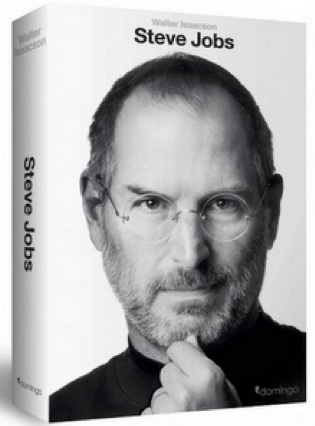
Each month I will share my personal truths about deliberate leadership, secrets stolen from the news, heavily guarded ideas that only a very select few people ever get to see (well, until the authors’ publishers made them available for purchase on Amazon) and occasional home-movies posted on YouTube. So, in the meantime I recommend you read “Steve Jobs” by Walter Isaacson. That should keep you busy until next time.  
And it may inspire you to see how such a deeply flawed human being can create a company that sought to, and then did, change the world. There is hope for me yet.
In order to hide my true identity  I am pretending to be myself. No one will ever think of looking for me here.

Phil Liebman is the CEO, Founder and Chief Leadership Catalyst at The BullFrog Group, where he has the privilege to work with heroic leaders to help create a world that is made better through the efforts of the men and women who lead and run successful businesses. He is also a freelance writer, speaker, Vistage Chair and a Fellow at the Thayer Institute for Leadership Virtuosity.